
The Loneliest Fight: Why Even the People Who Love Us Have Learned to Look Away
There is a particular kind of loneliness that comes with fighting the SEND system - and it is not the kind that gets talked about very often. Not the loneliness of battling institutions, but the quieter, more personal loneliness of watching the people who love you absorb a story about families like yours that makes it complicated for them to stand alongside you. This post is about that story, who built it, why it worked, and the families it has made completely invisible in the process.
“Masking Is a Myth, Late Diagnoses Are Wrong, and Non-Speaking Autistic People May Be Lying” - What Uta Frith Got Wrong
Professor Uta Frith has spent more than fifty years studying autism. Her influence on how itcame to be recognised in the UK is, by any reasonable measure, substantial. None of that is in dispute.
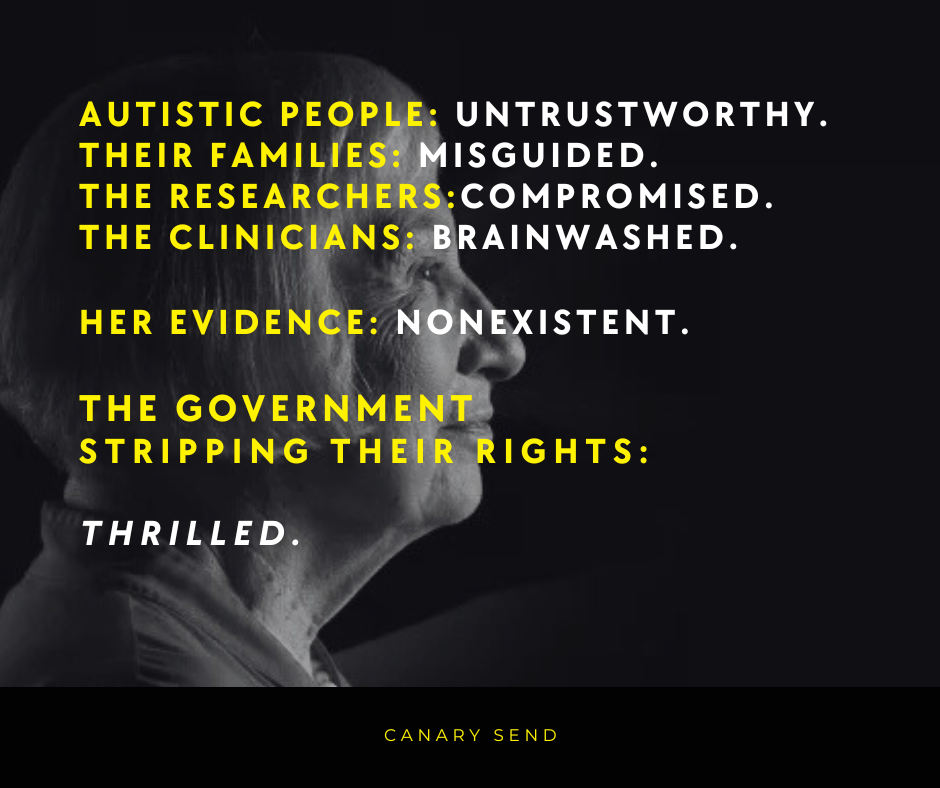
What is in dispute is what she said in a recent TES interview and podcast - that masking has no scientific basis, that late-diagnosed autistic women were probably never autistic in the first place, and that non-speaking autistic people who produce written accounts of their inner lives are probably committing fraud. She acknowledged, more than once, that she had no proof for any of it.
None of it was directly challenged on either platform. This is the response she didn't get.
A Response to Kathleen Stock On “If a Child Says ‘I Won’t’, Don’t Reach for a Label” (The Sunday Times, 22 February 2026)
On 22nd February 2026, The Times published a piece dismissing pathological demand avoidance as a pseudo-clinical label. The same morning, a forensic investigation documented 25 neurodivergent children who died after the system read their distress as defiance. This is a response to the article - and to the research it chose not to engage with.
The System Had The Tools - It Just Chose Not to Use Them
On 23rd February 2026, the Measure What Matters report and the Schools White Paper arrived on the same morning. One documented the deaths of 25 neurodivergent children failed by a system that had every legal tool it needed, the other proposed removing those tools. This is a response to both - and to what families can still do.
Reform or Retreat? A Close Reading of the Schools White Paper
Before anything else: the Schools White Paper is not law. Nothing in it changes your child's rights today. What it is, is a statement of intent - and when you read it carefully, the intent raises serious questions. The government's account of the SEND crisis locates the problem in the legal framework itself. The evidence accumulated by families, advocates, and the courts over years points somewhere else entirely: not at a framework that asked too much, but at institutions that were never meaningfully required to follow it. This is a close reading of what the paper proposes, what it leaves unresolved, and what it means for families navigating the system right now.
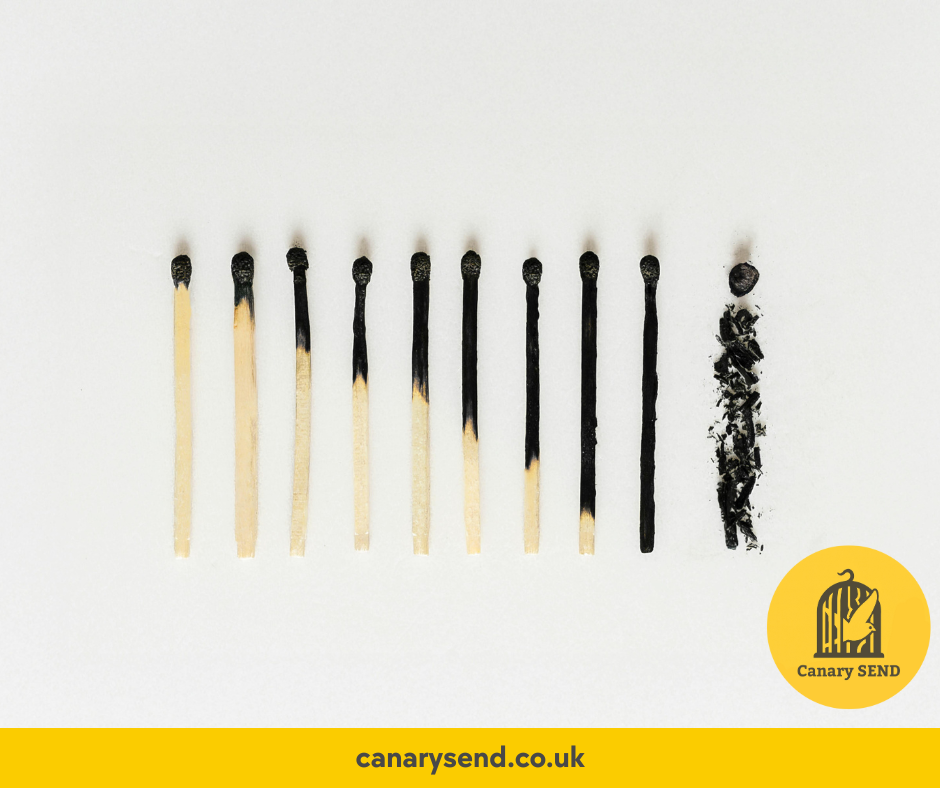
Beyond “School Refusal”: What Happens When a Child’s Nervous System Says Enough
In 2024, researchers examined 20 autistic children who had been unable to attend school for at least three months. Every single child showed the same cluster of symptoms: chronic exhaustion, loss of previously acquired skills, heightened sensory needs, social withdrawal, mood dysregulation, and physical complaints. All of them.
The researchers concluded these children were experiencing autistic burnout, and called explicitly for a shift away from punitive approaches toward compassionate, accommodative support.
This matters because when we get the language wrong, we get the response wrong. "School refusal" locates the problem in a child's decision. Burnout locates it in a sustained mismatch between environmental demands and nervous system capacity. One invites pressure to overcome resistance. The other invites environmental recalibration.
This piece unpacks what autistic burnout actually is, why mainstream schooling carries the particular cost it does for neurodivergent children, what the early warning signs look like, why increased pressure when capacity is depleted makes things worse, what recovery genuinely requires, and what the SEND legal framework says about children's entitlement to suitable education.

When a child suddenly wants to go back to school: a trauma-informed, neuroaffirming reflection
After weeks or months of school non-attendance, a child suddenly announces they want to go back. Not tentatively - with certainty and energy. Full days. No phasing.
For families navigating burnout, this moment brings both relief and unease. What if this goes wrong?
Here's what often gets missed: motivation returning is not the same as capacity returning. A child can genuinely want to try school whilst still lacking the nervous-system bandwidth to sustain it. And wanting to return doesn't mean the environment that contributed to burnout has become any more manageable.
This reflection explores what children are actually recovering from, why motivation returns suddenly, and what helps families navigate this fragile moment without inadvertently rebuilding pressure.
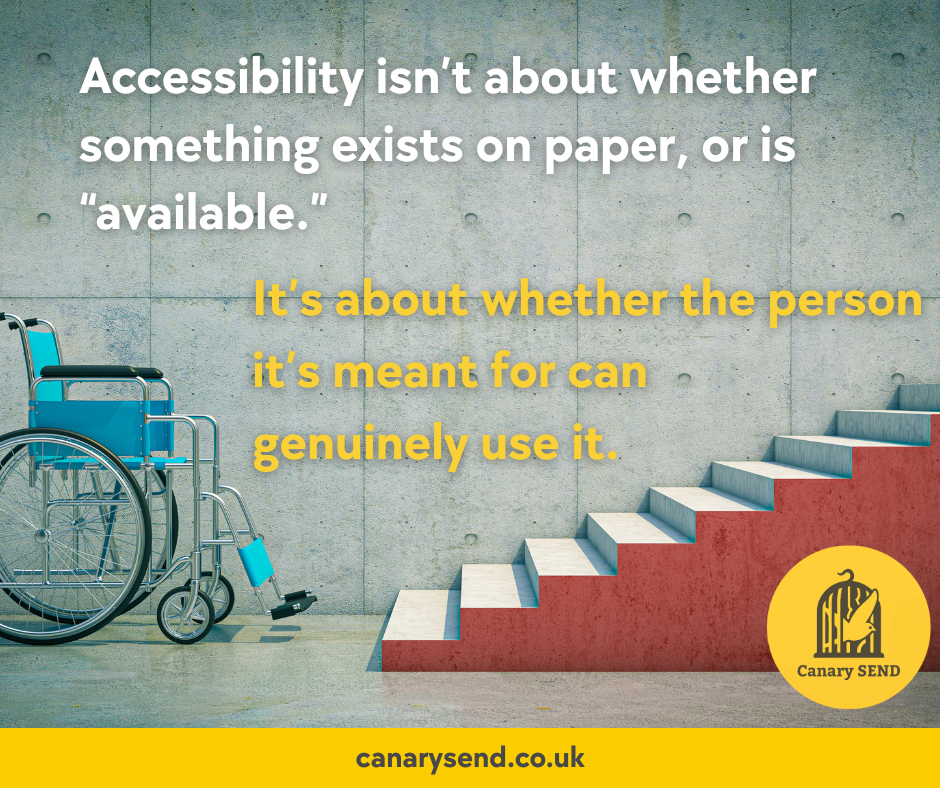
Education Only Counts If a Child Can Access It: Why EHCP appeals do not pause a child’s right to suitable education
EHCP appeals routinely take 12 months or more to conclude - and during that year, children’s needs still exist - and they’re still entitled to a suitable education - even if they are unable to attend school.
Appealing a poor plan does not pause a local authority’s duties, nor does it justify offering provision a child cannot access. This piece explains why education only counts if a child can actually receive it, and what the law says about Section 19, Section 42, and accountability during a live appeal.
The Invisible Evidence Problem: Why SEND Law Misunderstands Neurodivergent Children
Neurodivergent children often struggle invisibly at school. Masking, shutdown and home–school splits mean their needs go unseen — and SEND law misinterprets them. This is the invisible evidence problem.

The Quiet Divide: How the SEND System Turns Parents and Schools into Opponents
Most families begin their SEND journey already exhausted - having spent months trying to be heard by the school, only to be met with minimisation, delay, or subtle blame. When the local authority eventually enters the picture, the same patterns repeat, leaving parents convinced that schools and LAs are aligned against them. But behind the scenes, schools are experiencing a similar - often more coercive - version of the same dynamic, including pressure around the £6,000 notional budget that doesn’t actually exist as real funding. This quiet divide keeps parents and schools in conflict while the system that created it escapes scrutiny.
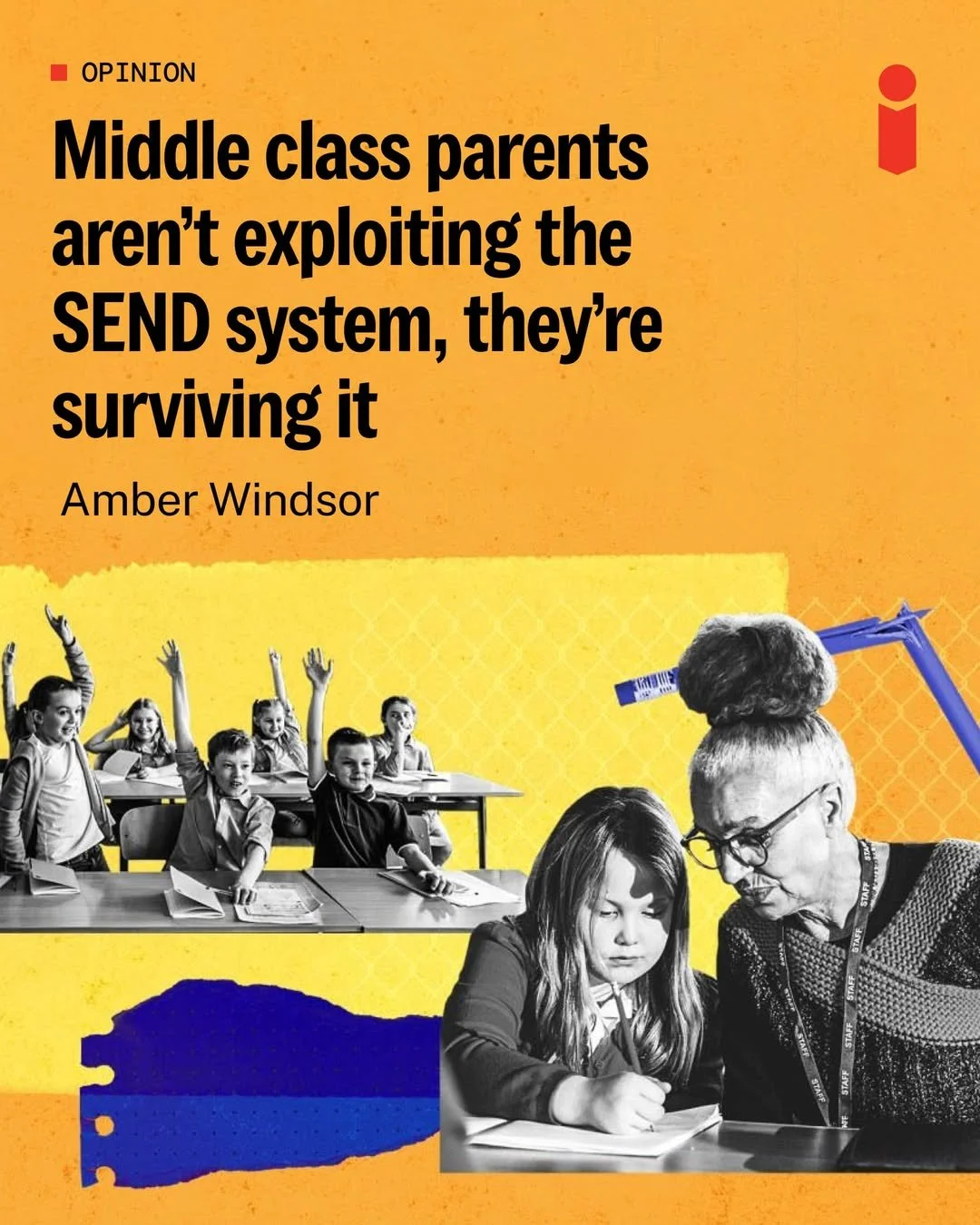
Why the SEND Crisis Hasn’t Sparked National Outrage - And Who That Silence Harms Most
After being invited to write a Perspectives piece for the i Paper responding to claims that middle-class parents are “gaming” the SEND system, I used the opportunity to explore a far more important question: why has one of the most serious systemic failures in Britain failed to spark national outrage? This blog expands on that theme - examining how class narratives, media framing and structural invisibility distort public understanding of the SEND crisis, and why the children we rarely see are the ones most at risk.

When Control Is a Cry for Safety: Understanding Demand Avoidance and Autonomy in Neurodivergent Children
When a neurodivergent child demands control, it’s easy to see defiance. But beneath the surface is a nervous system overwhelmed by invisible pressures - and a parent doing their best under their own load. This article explores why demand avoidance is so often a cry for safety, how two nervous systems can activate each other, and how reframing these moments transforms both behaviour and connection.

The Myth of the Regulated Parent
The idea that parents must stay perfectly “regulated” has become a modern parenting myth - one that places impossible pressure on families, especially neurodivergent parents. This blog unpacks why regulation isn’t a performance but a cycle, why repair matters more than composure, and how wider systems contribute to family dysregulation far more than individual “calmness” ever could.
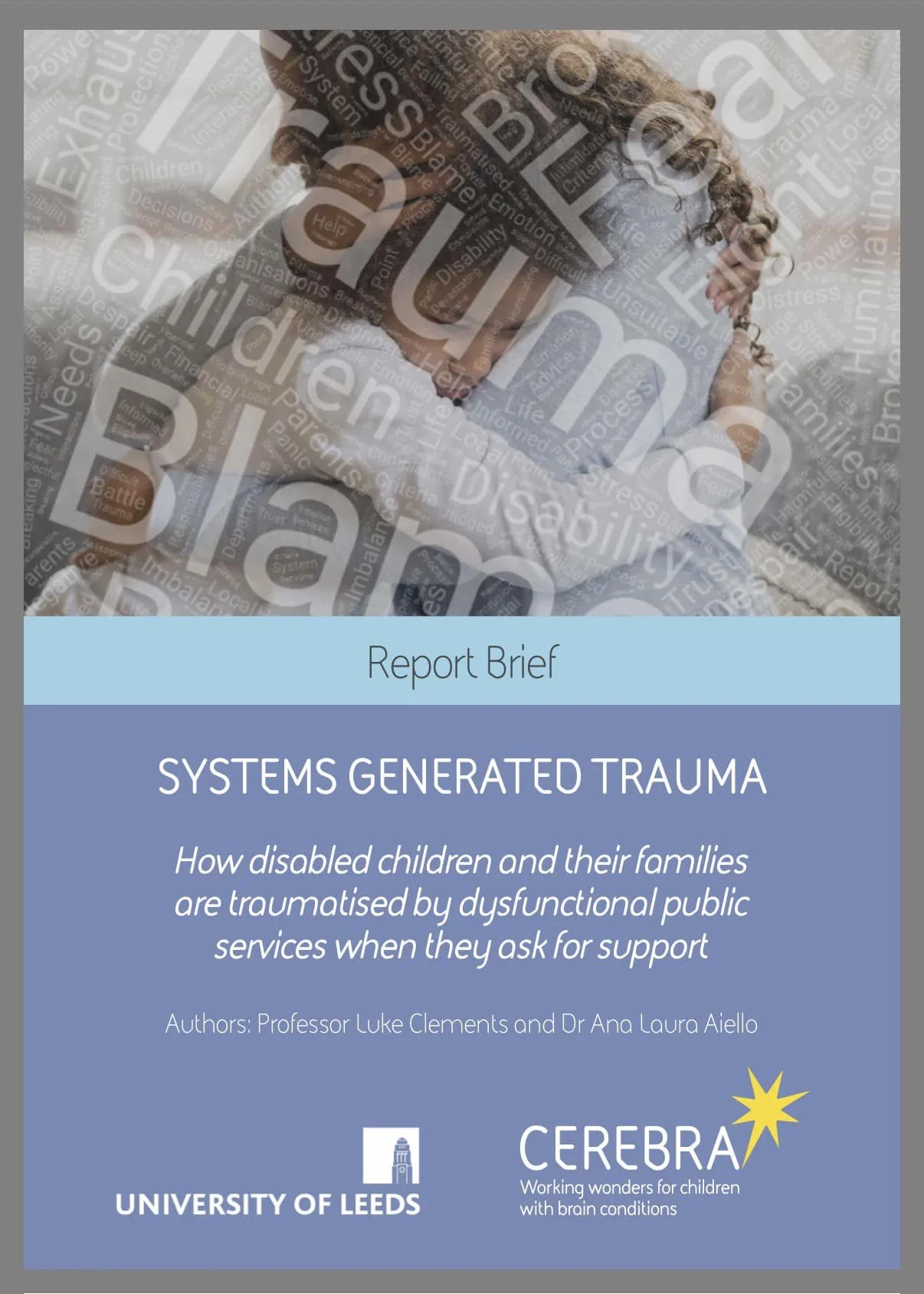
Systems-Generated Trauma: When Asking for Help Becomes Harm
Cerebra’s new report on Systems Generated Trauma confirms what families have lived for years: the greatest harm often comes not from disability, but from the very systems meant to help…

The False Divide Between Being Collaborative and Being Lawful
A growing trend in SEND is the idea that mentioning the law is somehow “unhelpful” or incompatible with collaboration. But the EHCP process is a legal one, and true partnership can only exist when statutory duties are understood and respected. When families are discouraged from referencing the law, collaboration becomes compliance - and accountability is quietly removed from the room.

The Things Professionals Miss: What “Fine in School” and One-Hour Assessments Will Never Tell You
Professionals often assume a child is “fine in school,” but parents see what happens when the masking unravels at home…

EHE, Section 19, and EOTAS: Untangling the Confusion
Many families are told to “home-educate” when their child can’t attend school - but that’s not always the right or lawful route. Here’s how to tell the difference between EHE, Section 19, and EOTAS…
The Quiet Work of Recovery: What Autistic Burnout Can Teach Us About Rest
After months or years of pushing through school, autistic burnout can look like a full stop. But rest isn’t regression. It’s the space where healing, curiosity, and self rediscover their way back in…

Why Mediation Is (Usually) Worth It
If your local authority has refused to assess, refused to issue a plan, or issued a poor final EHCP, it’s almost always worth requesting mediation…
When Inclusion Hurts: For the Children Schools Don’t Yet Know How to Hold
Thousands of children are struggling to cope in school - described as “fine when they’re here,” while unravelling the moment they get home.
But they’re not rejecting education. They’re showing us what real inclusion means.